
PLA and PLA Matte
Everyday parts, organizers, fixtures, tags and signage. Clean finish in gloss or matte.
- Full spectrum of colors in stock.
Additive manufacturing
AP3X prepares designs for printing, runs prototype iterations and produces custom parts for reviewed, non-safety-critical uses. Small runs and one-off parts are the focus.
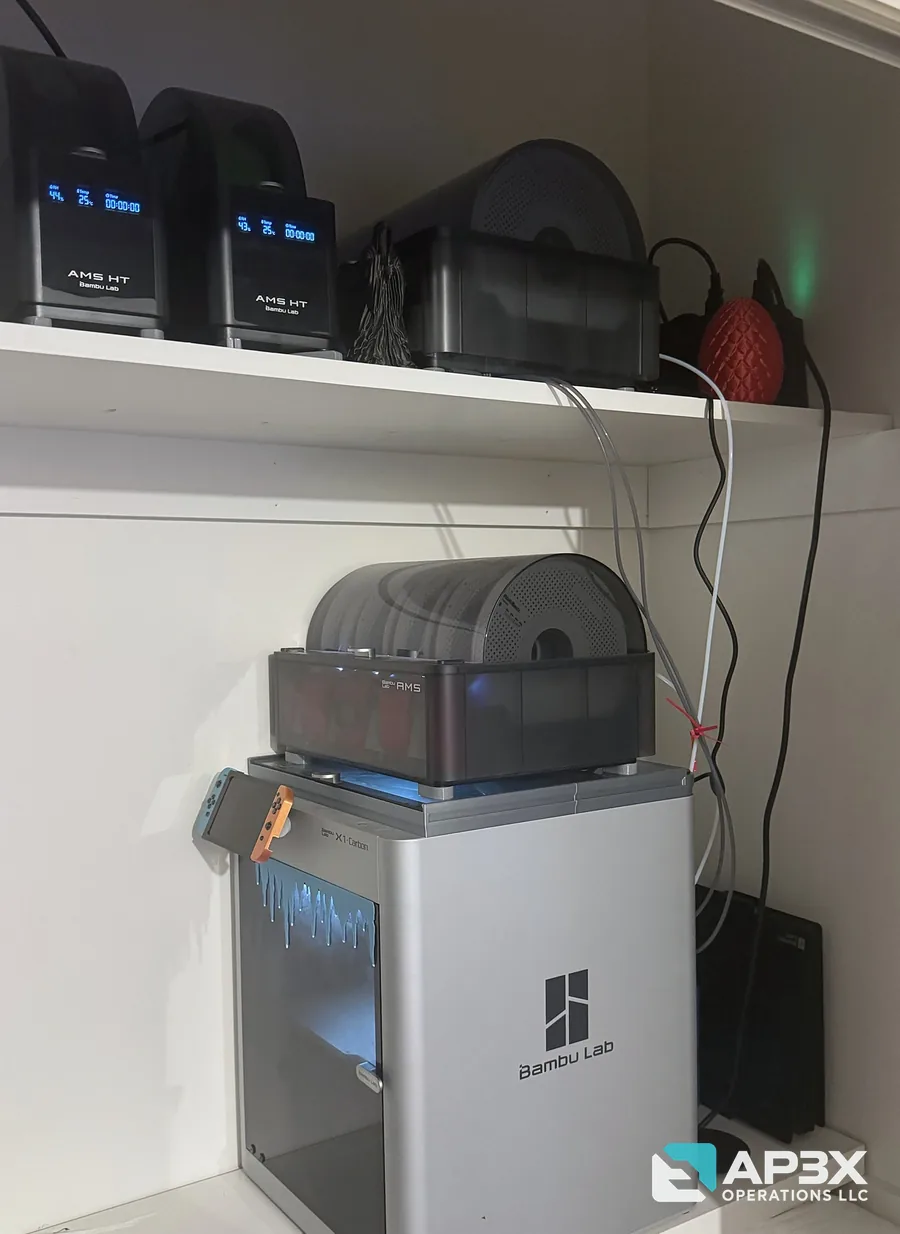
Equipment
Jobs run on an enclosed, multi-material machine and are prepared in Bambu Studio, so settings are matched to each part rather than left on defaults.
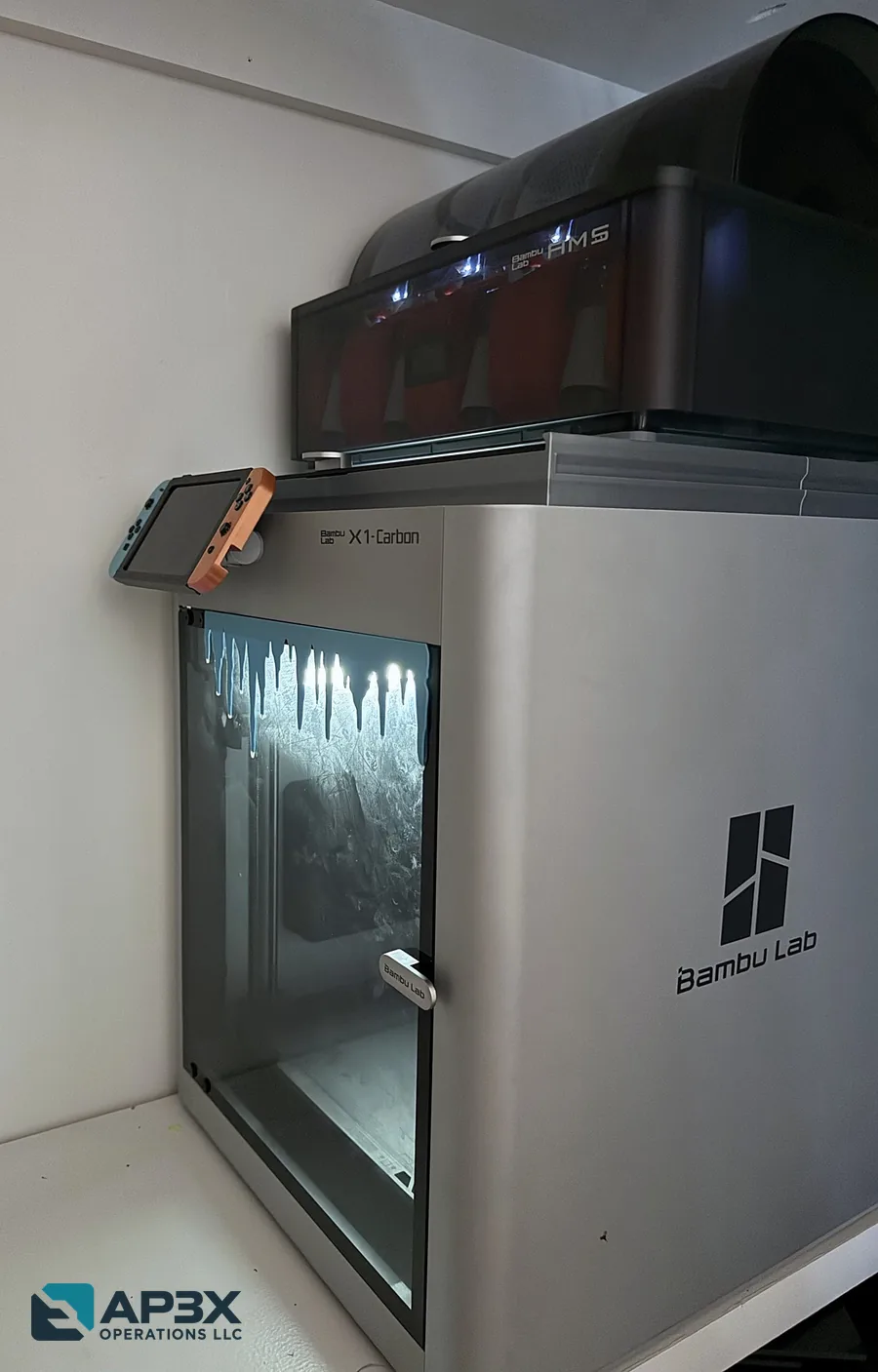
Enclosed core-XY printer
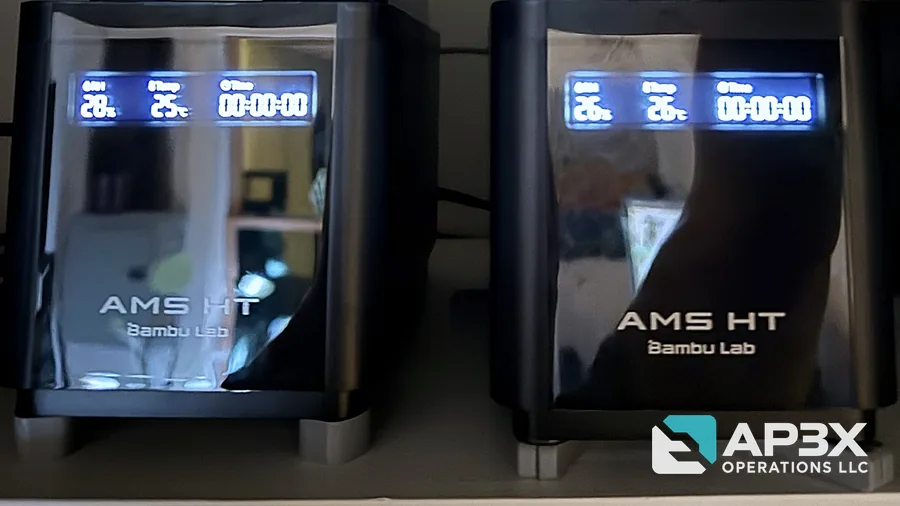
Materials
The right material depends on load, heat, flexibility and finish. If you are not sure which you need, describe the use and AP3X will recommend one.
Everyday parts, organizers, fixtures, tags and signage. Clean finish in gloss or matte.
Tougher parts with more impact and heat resistance than PLA. Carbon-fiber PETG‑CF adds stiffness for brackets, mounts and jigs.
Flexible parts such as grips, bumpers, covers and protective pieces.
Outdoor and sun-exposed parts. Resists UV and weathering, and handles heat better than PLA or PETG.
Recent work
Most jobs are practical: something that organizes, holds, protects or replaces. A few examples of what has been made so far.
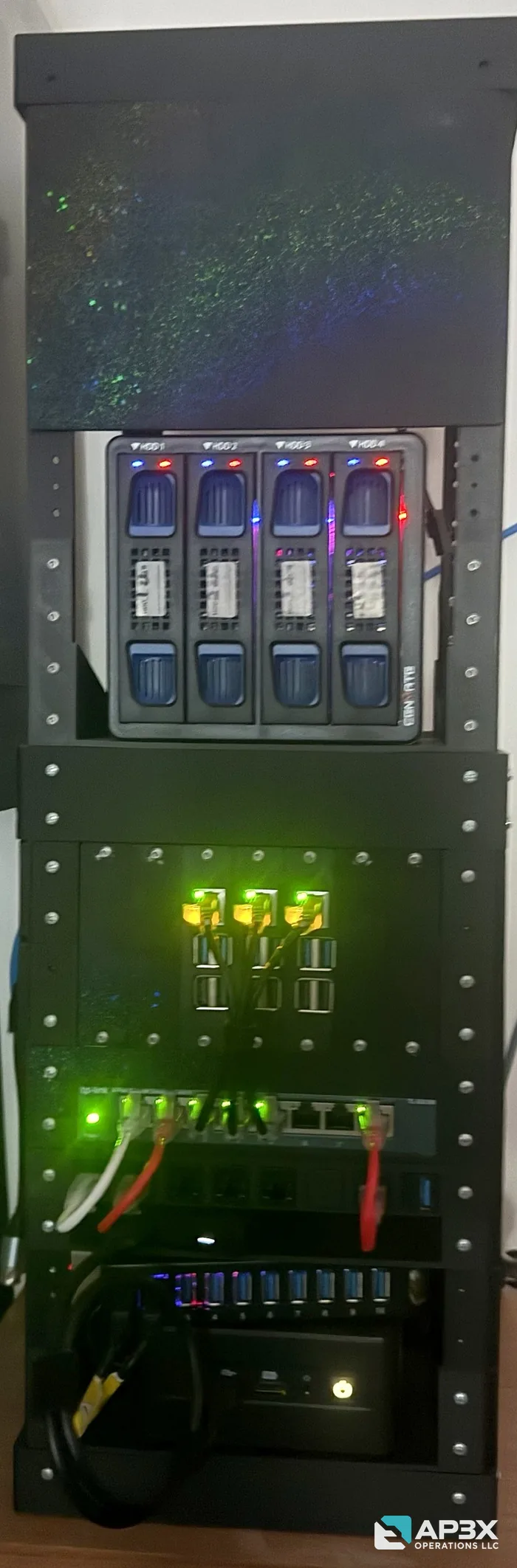
A custom 3D-printed rack system for a home lab. It holds a four-bay drive enclosure, a cluster of single-board computers, a network switch and supporting hardware, in a printed frame sized to the equipment.
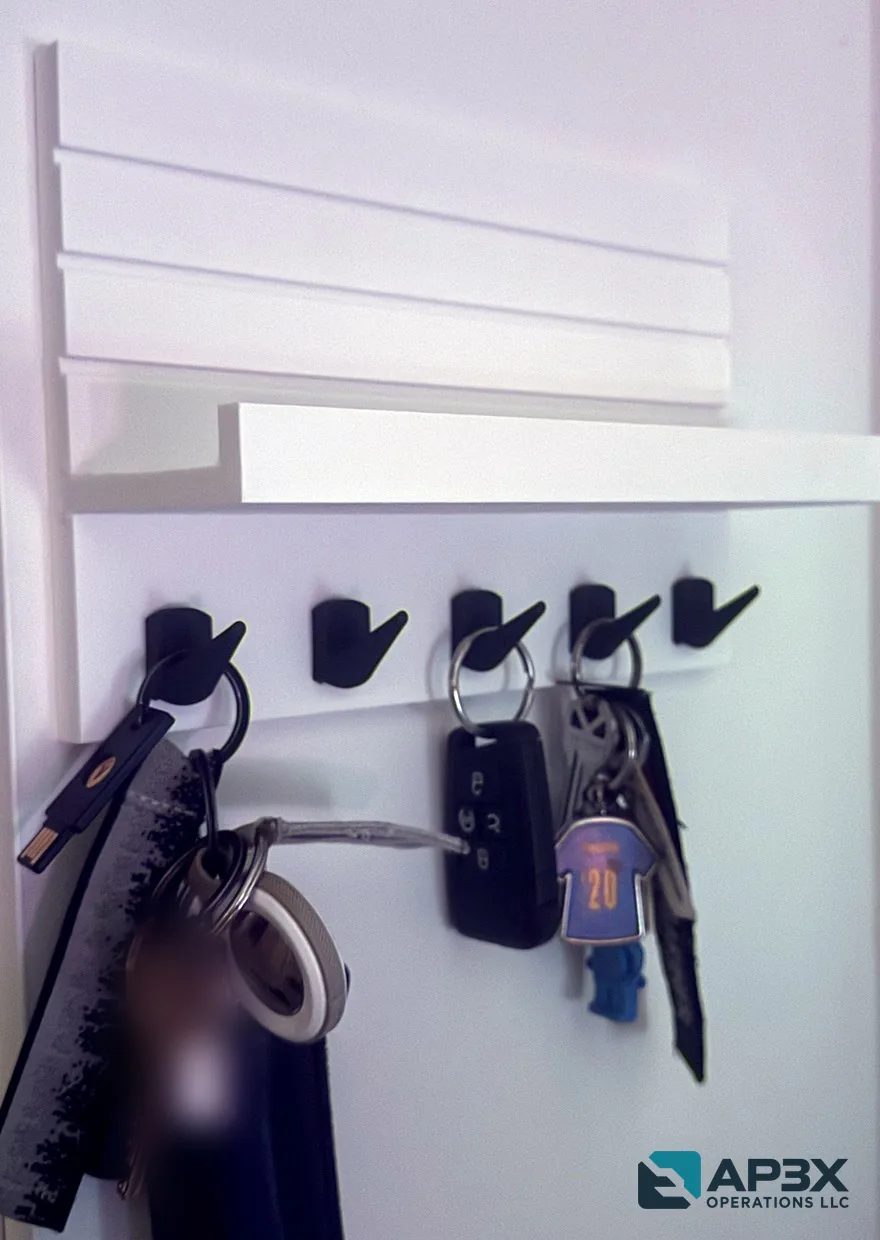
A wall-mounted key rack with a shelf above for mail and small items, and a row of hooks below so everyday keys have a fixed place.
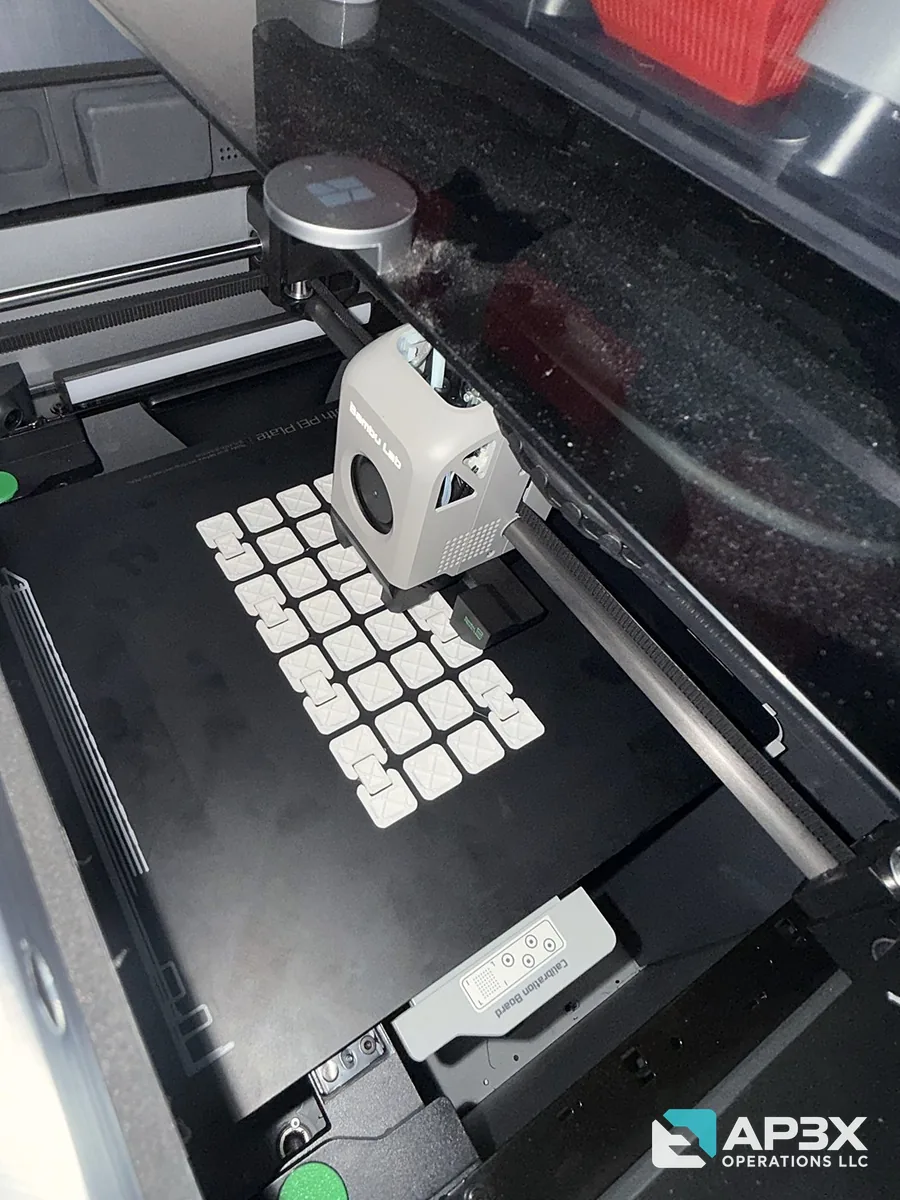
Four sets of infinity cube fidget toys printed together on one plate. Laying out repeat parts as one batch keeps setup time and cost per part down.
Twelve custom key tags, each holding three keys, plus a wall-mounted rack to hang them on. Designed so every set has a fixed, labeled place. About 9¾ hours of total print time.
Timelapses
Captured by the printer's own camera, one frame per layer, and sped up. Each clip plays while it is on screen.
How a print job works
Every job is quoted individually. Price and timing depend on size, material, quantity and how much design work is needed.
Send STL, 3MF or STEP files, or start from a sketch and measurements.
Email a model file, a sketch, photos or measurements. If there is no model yet, describe what the part needs to do and where it fits.
The design is checked for printability, then material, orientation and strength are chosen for the job. You get a quote and an estimated time before anything prints.
Parts are printed, cleaned up and checked before handoff, with any notes you need for fit or use.
Safety-critical parts are declined. That includes anything a person's safety depends on, such as load-bearing parts for people, vehicle steering or braking components, pressure-holding parts, and medical devices. Weapons and weapon components are also declined.
Start a print request
Send the file or describe the part, what it needs to do, and how many you need. AP3X will reply with questions or a quote.